
Baltimore Faces Foreclosure Fallout as Alleged $100 Million Real Estate Fraud Ring Implodes
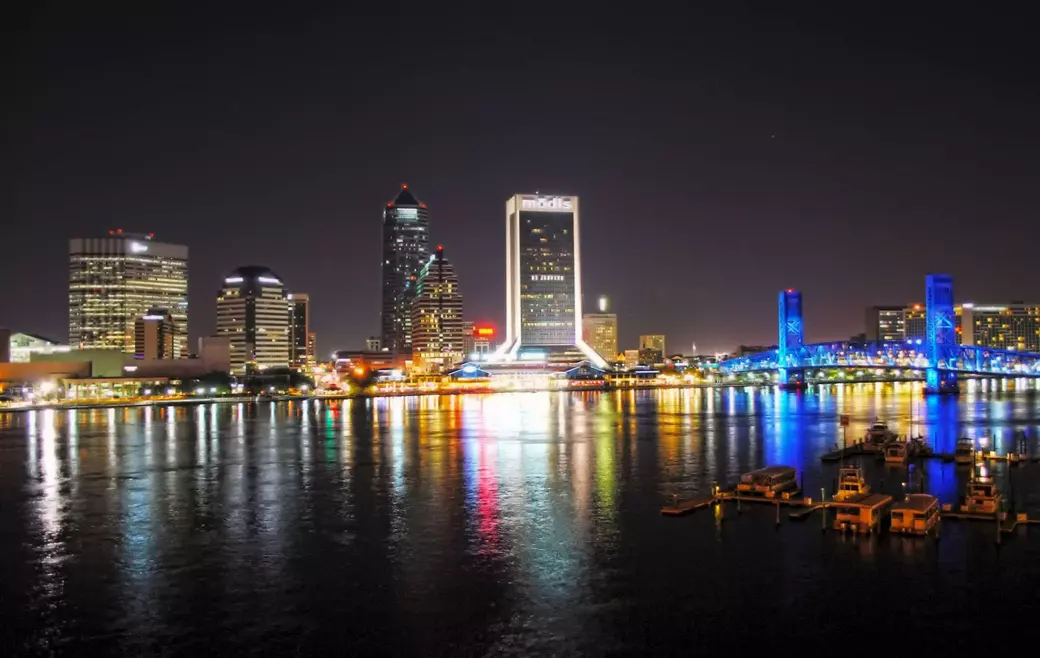
Baltimore is facing a rash of foreclosures tied to a suspected real estate fraud ring, leaving lenders and tenants of the foreclosed properties in the lurch.
A detailed investigation by the Baltimore Banner laid bare the astonishing details of the scheme, in which a group of New York-based investors allegedly purchased hundreds of Baltimore homes at wildly inflated prices using "hard money" loans, before defaulting on many of those loans.
The Banner identified a company called EGBE Ventures and a web of related entities, all tied to low-profile real estate investors Eluzer Gold and Benjamin Eidlisz, as the group at the center of the foreclosure crisis.
The investor group, based in an Orthodox Jewish community in Spring Valley, NY, purchased more than 700 homes in Baltimore for use as long-term rentals, primarily in majority-Black neighborhoods, according to the report.
The purchases were reportedly financed with some $100 million in debt service coverage ratio (DSCR) loans from dozens of private lenders. A DSCR loan is a form of hard money lending that uses projected rental income as the primary basis for approval.
Now, more than half of the properties owned by the New York group are in foreclosure, raising concerns about property values in the affected neighborhoods, credit availability for legitimate investors in Baltimore, and the fate of renters affected by the foreclosures.
Total foreclosures in the Baltimore area spiked 26% in the third quarter compared with the prior period, and were up 11% from a year earlier, according to real estate analytics firm ATTOM.
Maryland Secretary of Housing and Community Development Jake Day told Realtor.com® in a statement that his agency is closely tracking the properties affected by what he calls a "predatory scheme."
"At this time, it appears this activity is not representative of the overall Baltimore home acquisition and renovation market," said Day. "This predatory scheme won't deter us from our 15-year vision to eliminate vacancy in Baltimore."
Day said his department is working with the Baltimore Mayor's Office and other community development partners to track changes to market conditions and identify redevelopment opportunities for unoccupied vacant property, and will pivot to address any emerging challenges.
Pete Mills, a senior vice president at the Mortgage Bankers Association, says that "it is important to make clear that this was real estate fraud, not mortgage fraud."
"From what we understand about what happened in Baltimore, it was a sophisticated scheme that involved appraisers and title company actors who intentionally circumvented the protocols and documentation that lenders rely on to protect themselves from making loans on fraudulent real estate transactions," Mills tells Realtor.com.
"The lenders on these loans are victims of the fraud, as are the tenants in the properties now in foreclosure and disrepair," he adds.
How the Baltimore scheme unfolded
According to the Banner's report, many of the home purchases linked to the New York investor group were recorded for sale prices far above the price history and publicly available estimates of the property's value.
In one case, the New Yorkers offered $100,000 for a townhouse that had sold for $13,000 about five years earlier, and then took out a $220,000 loan for the deal, with much of the excess funds earmarked for an LLC registered to Eidlisz, the report said.
Supposedly, those funds were to repair and renovate the home, but the Banner found no permits tied to the property, and a longtime tenant said the home was never renovated.
Of the hundreds of homes connected to the New York portfolio, more than 70% haven’t had a single renovation or construction permit pulled since at least 2019, according to a Banner analysis of permitting data.
The New Yorkers relied primarily on DSCR loans, an alternative product favored by investors. DSCR loans typically carry higher interest rates and allow borrowers to access credit based on their expected rental income. However, there is nothing inherently risky about the loan products, industry experts say.
Instead, the lenders who financed the homes purchased by the New Yorkers say they were deceived in a scheme that involved a web of appraisers and brokers who were in on the plot.
RCN Capital, one of the many lenders that financed the New Yorkers' buying spree, says that "while this incident is deeply concerning, it is not representative of our industry as a whole.
"A group of bad actors operating within the real estate investment space recently orchestrated a highly sophisticated scheme that led to devastating consequences in the Baltimore area," the company said in a statement to Realtor.com. "These individuals deliberately studied the processes and guidelines of reputable lenders, including RCN Capital, to exploit vulnerabilities in the system."
The U.S. Attorney's Office in Maryland responded to a request for comment with an automatic reply citing the federal government shutdown. The Baltimore City State's Attorney's Office did not reply to a request for comment.
Attempts to reach Gold and Eidlisz for comment were unsuccessful, and an attorney who has represented them in foreclosure cases did not respond to a request for comment.
Categories
Recent Posts


"My job is to find and attract mastery-based agents to the office, protect the culture, and make sure everyone is happy! "