
Texas Gov. Greg Abbott Cracks Down on Squatters
Gov. Greg Abbott/Instagram; Lori Van Buren/Albany Times Union via Getty Images
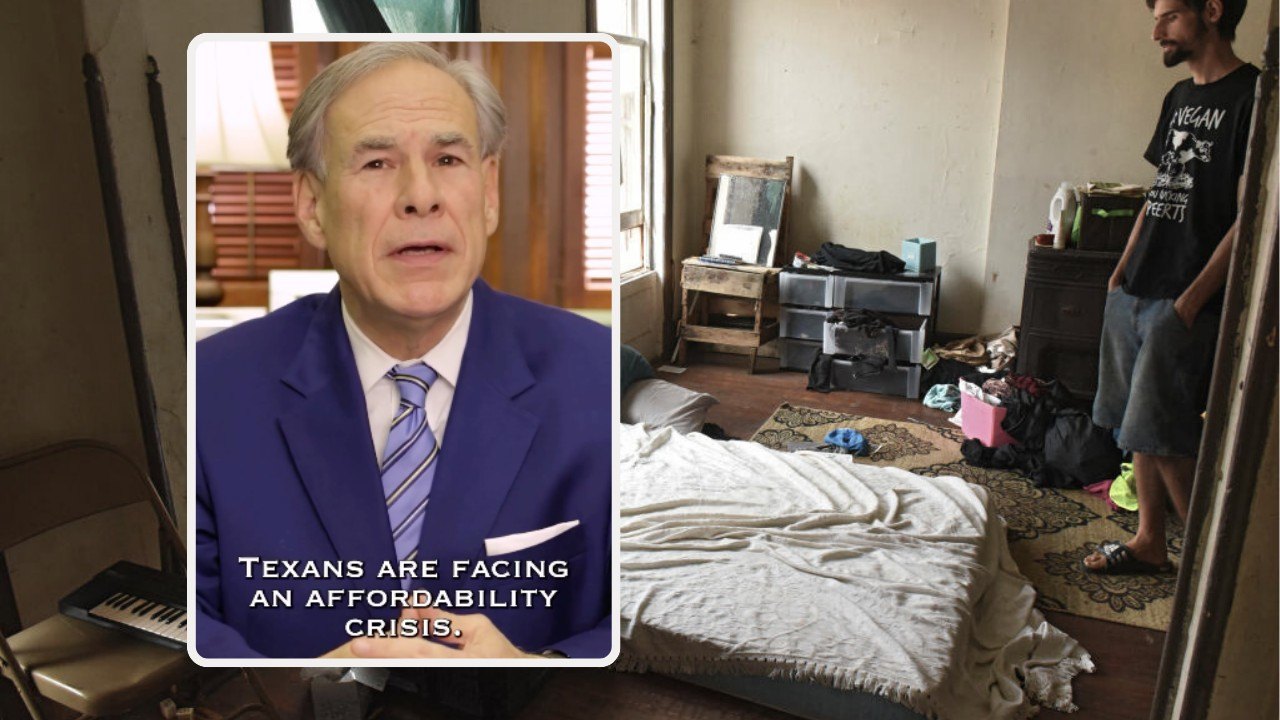
Texas Gov. Greg Abbott has taken aim at squatters, calling for tougher laws to protect private property from unwelcome interlopers.
In his annual State of the State address on Sunday, the Republican leader said he planned to crack down on squatters because it was a pressing “public safety” issue.
“Private property rights are a cornerstone of our values and legal system,” Abbott said. “It is against the law to live or stay on somebody’s property without their permission. We need stronger laws to immediately remove and prosecute squatters.”
State Sen. Paul Bettencourt and State Rep. Angie Chen Button, who have been working together on tightening anti-squatter laws, later thanked Abbott for making the issue a priority.
“It was great to hear @GregAbbott_TX name this issue a priority because it not only threatens community safety, it impacts housing affordability and availability,” Chen Button posted on X.
Bettencourt wrote that he was looking forward to joining forces with Chen Button to file a “strong anti-squatting bill” in both chambers of the Texas Legislature.

( Bill Clark-Pool/Getty Images))
Squatters’ rights in Texas
A squatter is defined as anyone who takes over an unoccupied or abandoned property without legally owning or leasing it, or having permission from the lawful owner to stay there.
Under current Texas laws, short-term squatting is illegal and could be cause for eviction and prosecution on charges of criminal trespass, theft, or mischief.
However, squatters enjoy certain protections under both federal and state laws. Similar to other states, Texas has what is known as Squatters’ Rights, which outline the conditions under which a squatter can lay claim to someone else’s property through a mechanism called “adverse possession.”
To do that, the squatter must be physically present at the property and treat it like an owner would.
The squatter also must make it obvious that they have been living on the property openly, on their own, and without the rightful owner’s permission.
Finally, the squatter must have resided on the property for a continuous, uninterrupted period of between three to 10 years, depending on the circumstances.
How other states are combating squatters
Nationally, squatting is relatively rare, but a 2024 study from the National Rental Home Council found that Dallas was among the cities with the highest number of squatting incidents, alongside Orlando, FL, and Atlanta, according to Newsweek.
The study identified an estimated 475 homes in the Dallas-Fort Worth area alone that had been commandeered by squatters.
Dislodging squatters from a property can be a difficult, time-consuming, and costly process, especially in states with robust protections for squatters, such as New York.
The growing outcry against the problem in the Big Apple prompted Democratic Gov. Kathy Hochul last April to sign a new law that clarified that squatters are not legal tenants.
Around the same time, Georgia Gov. Brian Kemp, a Republican, signed into law the Georgia Squatters Reform Act to protect homeowners by making it easier for law enforcement officers to remove unlawful tenants.
Tackling Texas’ broader housing issues
Back in Texas, Abbott on Sunday presented a raft of proposals for addressing the issues facing the state’s housing market beyond the squatting problem.
Abbott called for at least $10 billion in new property tax relief, which he designated as an emergency item that must be passed. At the same time, he scolded local taxing authorities for using loopholes to hike homeowners’ property taxes.
“Loopholes that increase your property taxes must be banned,” the governor declared. “No taxing entity should be able to raise your property taxes without a two-thirds approval by voters.”
Abbott also addressed the dearth of affordable housing in Texas, calling on lawmakers to make it easier to build homes, cut back on red tape, and speed up the permitting process.
“And to make your current home more affordable, we should offer a one-year tax exemption on home improvements, like heating and air conditioning,” he added.
In line with the rest of the U.S., Texas is suffering from a deep inventory shortage. According to a recent estimate by Up for Growth, the state was about 320,000 homes short to meet the demand for housing as of last fall.
The real estate scarcity has resulted in home prices and rents going up, even with Texas leading the U.S. in homebuilding.
Categories
Recent Posts


"My job is to find and attract mastery-based agents to the office, protect the culture, and make sure everyone is happy! "