
‘Zombie Foreclosures’ Are On the Rise. Should the Housing Market Be Spooked?
Getty Images
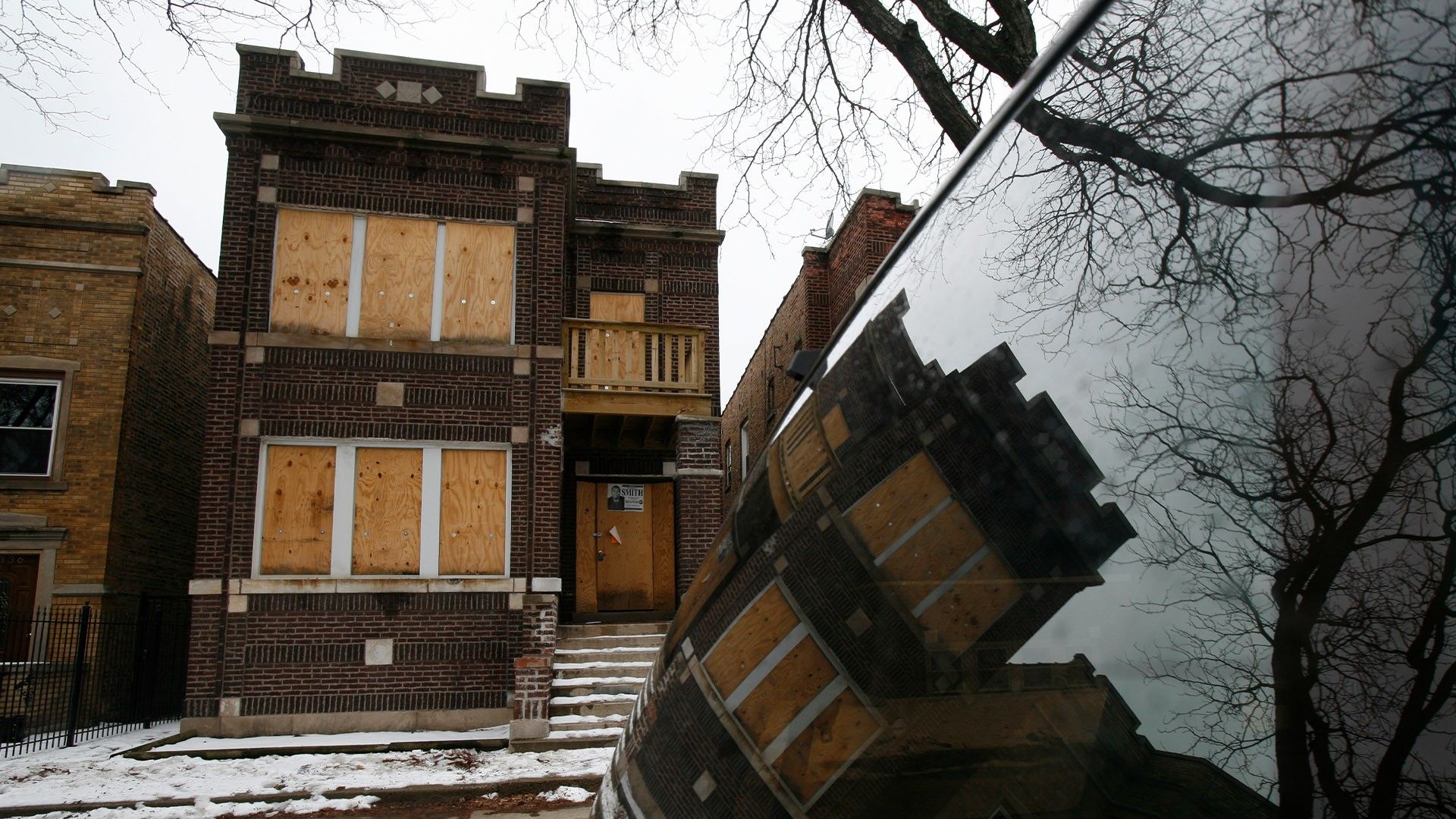
Zombie foreclosures are steadily spreading. But instead of going after brains, they’re slowly infecting the housing market.
The number of vacant, foreclosed properties, aka “zombie foreclosures,” reached nearly 1.3 million homes in the fourth quarter of this year, according to a recent report from real estate data firm ATTOM. The number of empty homes jumped 15.3% year over year and ticked up 1.4% from the previous quarter.
However scary that might seem, that translates to just 1 in every 11,412 homes nationally. Just about 1.27% of all properties (foreclosures or not) are empty.
“Rising equity flowing from rising home values has not only kept foreclosure cases from spiking since the [federal foreclosure] moratorium was lifted. It also keeps giving delinquent homeowners a valuable resource they can use to either stave off eviction or sell their homes and move on,” ATTOM CEO Rob Barber said in a statement. “As a result, we continue to see none of the widespread abandonment that followed the housing market crash after the Great Recession of the late 2000s.”
ATTOM analyzed county tax assessor data for foreclosures, equity, and owner-occupancy for about 101 million residential properties. The analysis included only metropolitan areas with at least 100,000 residential properties and counties with at least 50,000 properties.

Getty Images
The rise in these empty properties is a result of the surge in foreclosures nationwide. During the COVID-19 pandemic, foreclosure moratoriums were put in place to protect homeowners who suddenly found themselves out of work from losing their homes. Those moratoriums have largely expired.
Nearly 321,000 residential properties were in the process of foreclosure in the fourth quarter, a 12.8% rise from the same time last year.
That’s enough to spook the housing market despite real estate experts not worrying about another foreclosure crisis.
Fewer risky loans are being made today and many homeowners have enough equity in their properties to sell their homes if they get into trouble and avoid a foreclosure. There are also many more would-be buyers than there are homes for sale, a reversal from the Great Recession.
At least 95% of homeowners had some equity in their homes, and about half owed less than what their properties were estimated to be worth.
“The ongoing strength of the U.S. housing market continues to benefit neighborhoods around the country in so many ways,” Barber said.
Where are the most zombie foreclosures?
The worst places to survive a zombie foreclosure apocalypse were in the Midwest and rural New York.
New York had the highest ratio of zombie foreclosures, totaling about 1 in every 2,115 homes. Ohio was next, with 1 in 3,690, followed by Illinois, with 1 in 4,338; Iowa, 1 in 4,380; and Indiana, 1 in 6,114.
Peoria County, IL, had the highest zombie foreclosure rate, with 15.6% of all homes in foreclosure sitting vacant. (ATTOM looked only at counties with a minimum of 500 properties in the foreclosure process in the fourth quarter.) Baltimore County, MD, had 14%; Marion County, IN, home to Indianapolis, had 13.1%; Broome County, NY, home to Binghamton, had 11.4%; and Cuyahoga County, OH, home to Cleveland, had 8.2%.
The post ‘Zombie Foreclosures’ Are On the Rise. Should the Housing Market Be Spooked? appeared first on Real Estate News & Insights | realtor.com®.
Categories
Recent Posts


"My job is to find and attract mastery-based agents to the office, protect the culture, and make sure everyone is happy! "