
Is a Boom in Commercial Offices Jeopardizing the Future of Affordable Apartments?
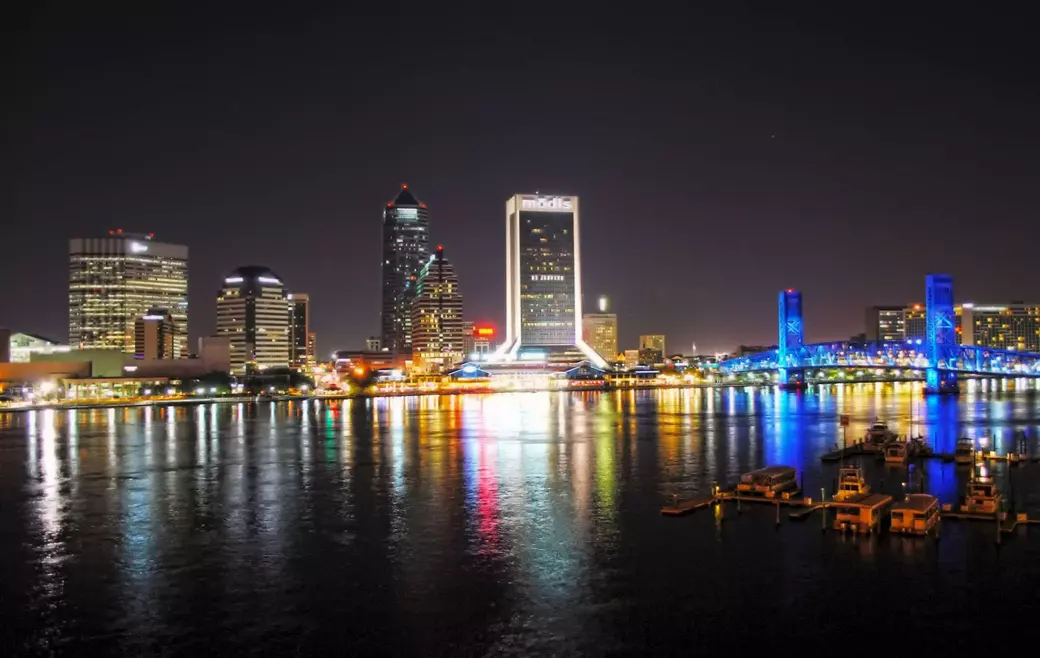
Just a few years ago, converting empty office buildings into apartments seemed like one of the most promising solutions to the affordable housing crisis plaguing America’s biggest cities. New York, Chicago, and San Francisco all began fast-tracking office-to-residential conversions, unlocking millions in public funding along the way to make them work.
But that future is facing an unexpected and unlikely road bump: a comeback in commercial office demand. Office leasing saw its biggest gain since 2019 in 2024, according to data from real estate firm CBRE, with sales volume jumping 21% year over year to $64.3 billion, according to MSCI Real Assets, a commercial property data firm.
At the same time, some of the biggest conversion projects are facing very public meltdowns. Take 20 Broad Street in Manhattan’s Financial District, a marquee office-to-residential conversion that opened just a few years ago. The developer is facing default on its $250 million mortgage, according to reporting from The Real Deal.
It raises a troubling question: If the economics of conversion are this fragile for buildings that already made the leap to housing, what happens to those still in limbo?
The rise (and stall) of conversions
Despite recent headwinds, office leasing is still on the rise with a record 70,700 apartment units in the adaptive reuse pipeline for 2025, according to RentCafe. That’s more than triple the number in 2022.
But of the 55,000 units that were planned for conversion in 2024, just 3,700 were actually completed. The gap between plans and execution underscores the many obstacles developers of these projects face: zoning delays, financing hurdles, and the complex logistics of retrofitting office buildings into livable housing.
Peter Kolaczynski, associate director of Yardi Matrix, a commercial real estate data firm, says there might actually be an opportunity in all the ambiguity.
“Office demand increasing is a positive development (even if not at a huge rate),” he says. “I would argue this will highlight which buildings should be converted.”
Essentially, we may have a clearer idea of what types of buildings make for promising conversions, and which should be left as office spaces.
The downtown dilemma: imbalance, opportunity, and risk
In major U.S. cities, a staggering 70% of downtown real estate is still devoted to office space, according to Cushman & Wakefield. And just 15% is residential. That skewed balance leaves cities vulnerable to cascading risks, says Doug Ressler, manager of business intelligence at Yardi.
“If cities convert more lower-quality office buildings into housing … they could unlock as much as $340 billion in value,” Ressler adds. That value could mean more than just a developer’s bottom line. It could be the key to stronger tax bases, renewed investor confidence, and a broader economic reset for struggling downtowns.
In this light, office-to-residential conversions become more than a housing solution—they’re an urban survival strategy. Bringing more people downtown to live (not just work) could breathe life back into city centers, creating demand for such services as lunch spots, laundromats, schools, and public transit.
Can conversions stay affordable?
New York City has long been a proving ground for turning office towers into homes. After 9/11, the city pioneered one of the nation’s most aggressive conversion efforts. Now, it’s once again leading the charge.
Under the city’s new City of Yes zoning reforms, 69 buildings have already expressed interest in converting from office to residential use. These changes—along with state and local incentives like tax breaks and zoning waivers—are designed to make adaptive reuse financially viable while ensuring affordability with strict requirements for future tenants.
New York’s programs could "enable the conversion of 25 to 40 million square feet of office space,” says Ressler, noting that much of it lies in prime Manhattan districts. “Partial conversion has created a viable new pathway,” blending market-rate and affordable units in once-unthinkable locations.
Still, affordability is far from guaranteed. Without strong guardrails, there’s a risk these conversions will trend toward luxury living, especially in buildings that are costly to retrofit. And if projects stall due to financing or rising office demand, the window to create meaningful affordability could close.
What happens if this opportunity passes us by?
The chance to transform America’s city centers won’t last forever.
Revived office demand is already pushing some building values higher, which could make housing conversions harder to pencil out. Buildings that may have been prime candidates for reuse in 2023 or 2024 could become financially out of reach by 2026, especially in hot markets where investor appetite is rebounding.
But there’s a chance to use these points of feedback as valuable insights into what makes office conversions work, and in what cities they work.
Washington, DC, for example, with a strong federal footprint (even in spite of recent layoffs), may see stable long-term demand for offices. But in tech-heavy metros where hybrid work remains dominant, a glut of underused space could persist—and with it, a fragile downtown economy.
“Cities and policymakers … need to incentivize as much as possible. Some of this needs to be financial but also making it easier to build housing and removing restrictions that are in place—whether zoning or regulatory,” says Kolaczynski.
Ressler notes that partial conversions—transforming only a portion of a building into housing—can help balance financial feasibility and supply needs.
Not everyone can afford luxury office space, he says. But partial conversions help owners maximize value and create upgraded facilities. "Washington, DC, NYC, and Chicago are incentivizing adaptive reuse. Where these conditions come together, conversion projects benefit owners, occupants, and other stakeholders," he says.
In other words, the rising tide of office demand doesn’t have to sink the conversion wave. But the longer policymakers wait to act, the more likely it is that office space will be priced back out of housing and out of reach for the people who need it most.
The choice ahead will be about revitalizing downtowns for everyone or retrenching into old patterns that left them hollow to begin with.
Categories
Recent Posts


"My job is to find and attract mastery-based agents to the office, protect the culture, and make sure everyone is happy! "