
They Moved for Cheaper Homes—Now They’re Rewriting Your City’s Zoning Rules
Zoning hearings and land-use ballot measures used to be the kind of thing that made voters' eyes glaze over. But, in the past few years, they've become a political topic du jour—at least by local government standards.
In New York City, these conversations took center stage in a mayoral election that inspired the highest voter turnout since 1969. Meanwhile, in Phoenix, the fight over 226 affordable apartments got so heated that residents brought their farm animals to a neighborhood meeting in protest. And in Texas, lawmakers recently passed a bill to limit neighbors’ ability to challenge zoning changes in their neighborhoods.
These might sound like local quirks, but they’re part of the same national story. As COVID-19 pandemic-era migration reshaped who lives where, zoning fights and land-use rules have gone from sleepy, insider topics to some of the most emotional battles in local politics.
The difference in tenor of these discussions from city to city is a reflection of a larger, thornier problem plaguing America. Migration flows haven’t just changed where people live; they've also shifted who shows up to fight about what gets built—and that change has the power to rewrite which places stay affordable.
The big sort: How pandemic-era migration changed where Americans live
To understand how we got here, it’s important to first untangle the lasting effects of the pandemic. Remote work policies, low mortgage rates, and a need for wide-open spaces inspired Americans to pick up and move in ways that accelerated preexisting trends.
Before COVID-19, about 5 million metro-area tax filers moved counties each year. By 2021, that rose to 5.8 million, according to research from the Brookings Institution. At the same time, a slow pre-pandemic trickle of people leaving smaller metros for big, expensive ones flipped direction. And by 2022, far more households were exiting the largest metros for midsized and smaller markets.
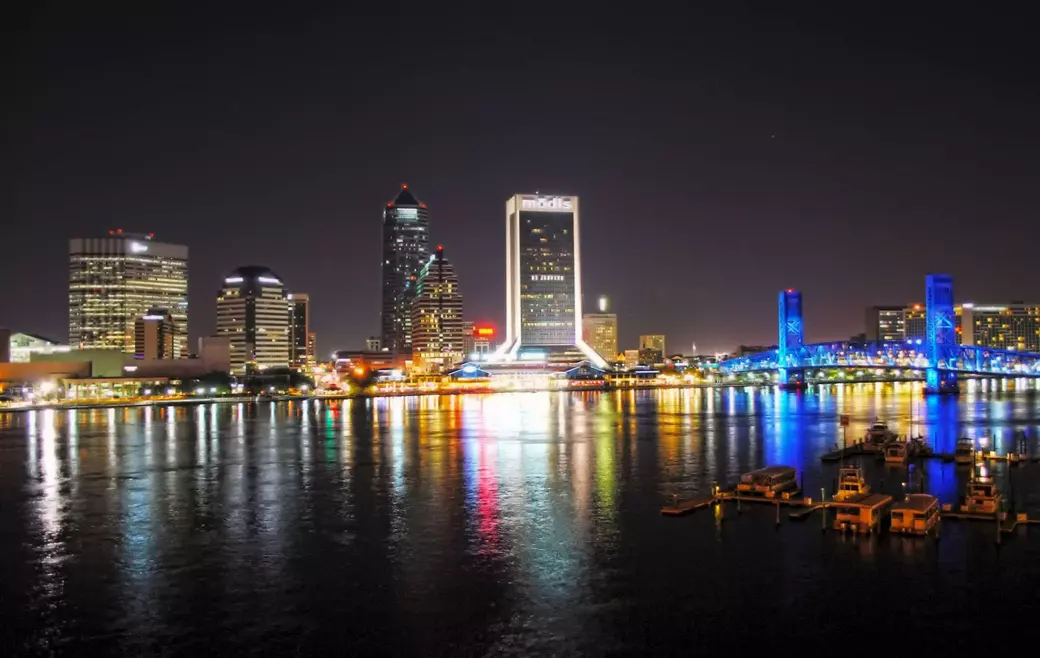
That shift hit New York City, San Francisco, Los Angeles, Boston, and Chicago hard, as more people left between 2019 and 2021. Meanwhile, places like Dallas, Houston, Tampa, FL, Jacksonville, FL, Charlotte, NC, and San Antonio gained residents through 2022, offering cheaper housing while still feeling like real cities.
If that sounds abstract, think of your own orbit: The cousin who bailed on New York City for a cheaper, larger place in Philadelphia; the friend who traded a San Francisco studio for a house with a backyard in Sacramento; the co-worker you used to see in the office every week who went remote. They’re far from one-off anecdotes, reflecting a durable flow of people, income, and new households out of high-cost hubs and into adjacent metros.
Remote work, higher incomes, and the new housing voting bloc
Those flows of new residents brought with them new ideas, new frustrations, and, of course, new voters.
Remote-friendly jobs are heavily concentrated in blue-leaning counties, but the people holding them landed disproportionately in red and purple states, according to an analysis of IRS and MIT Election Lab data by doctoral candidates Peter John Lambert and Chris Larkin. Within states, many movers traded deep-blue urban cores for more politically mixed suburbs.
These residents also arrived with above-average incomes, more flexible schedules, and experience with inventory-restricted and cost-prohibitive cities.
Austin housing advocate Nicole Nosek is just one example. After moving to Austin from California in 2019, she says she immediately recognized the same forces that had pushed San Francisco Bay Area housing out of reach: strict zoning rules, fussy building codes, and an entrenched “not in my backyard” mentality.
“I was shocked to see a few Austinites blocking housing reforms for the many—literally a few dozen Austinites filed a lawsuit to block missing middle housing for about 1 million Austinites like teachers, firefighters, and police who were being pushed out of the Austin metro every day,” she says.
Her urgency came straight from her California experience, where she lived “practically on top of strangers” in a three-bedroom apartment with another renter and a family.
“I felt lucky if I had $1,000 left at the end of the month,” she says. “The Bay Area experience was a crash course for me in what not to do on housing policy.”
So when she arrived in Austin, she was motivated to act, testifying at hearings and organizing a bipartisan coalition devoted to tackling affordable housing in the state.
Her organization, Texans for Reasonable Solutions, has played a crucial role in passing a slew of bills to incentivize building, like SB 840, which allows commercial land to be converted to housing; SB 15, which caps local minimum lot sizes in new neighborhoods; SB 2477, which streamlines office-to-residential conversions; and HB 24, which reforms zoning protest thresholds so small minorities can no longer block broad reforms.
The effects of her efforts are hard to ignore. Today, Texas earns top marks in affordability, according to State-by-State Report Cards from Realtor.com®.
'A townhome—heaven forbid'
Despite her success, Nosek says some longtime Austinites “didn’t exactly roll out the welcome mat for a 2019 Californian ex-pat trying to change housing laws.”
To opponents of reform, she quickly became a symbol: “The California transplant using her energy and time to upend their neighborhoods with a townhome—heaven forbid,” she says.
It makes sense in a state like Texas, which has historically been suspicious of California and has an identity deeply rooted in its own sense of individualism, and even more sense for a place like Austin, which prides itself on staying “weird.”
But Nosek’s outsider status turned into her strongest credential.
“Our coalition of over 50 organizations talked about free-market fixes and held up California as a cautionary tale to what happens to young families and teachers when cities don’t make room,” she says. “I’d say, ‘Here’s how California destroyed their housing market. If you want to drive your middle-class families and businesses out of the state, just copy California’s overregulation.’”
Once people understood she wasn’t trying to “Californian-ize” Texas, but to prevent Texas from repeating California’s mistakes, much of the suspicion eased.
“It’s critical to build odd alliances,” she says. “When people who usually disagree all lock arms to actively walk the halls for a solution, the vote counts reflect that. If Texas can get Republicans and Democrats on the same page to keep housing affordable, places like California can surely do the same.”
Even shrinking cities can't escape the new zoning wars
It’s a potent message, considering that cities with out-migration are facing much of the same pressures as those with in-migration, but without the shock effect and experience of newcomers brandishing cautionary tales.
Instead, in out-migration cities, the coalitions showing up to make these decisions are younger voters whose entire adult lives have been shaped by high rents and scarce inventory.
“There are a handful of American cities that are focal points for migration of young, college-educated adults. Obviously, New York City is one of them,” explains Eric Kober, senior fellow at the Manhattan Institute. “That's really changed the political topography in New York City.”
At the same time, the city is losing people at both ends of the income spectrum.

“The population turns over, sort of continuously,” Kober notes. Retirees continue to decamp for “sunnier places” and “people who are less affluent and can't find housing or can't find housing that's suitable to their needs migrate to cheaper parts of the country.”
The result is a constantly shifting electorate—and in that churn, candidates like Zohran Mamdani, who put housing affordability at the center of his campaign, can prevail by “correctly identifying this young, college-educated adult population” and what animates them, Kober says.
“If zoning were not so restrictive in New York City, there would be more in-migration and less out-migration,” Kober argues. People leaving for cheaper metros “can live better” even if they earn less, while those who stay or arrive are often paying the price of scarcity.
“Housing and, ultimately, restrictive zoning is the very root cause of a lot of these individual rational decisions that people make,” he says.
So even in cities that are losing population on paper, zoning battles are proving to be a central issue because they determine who can afford to stay, who has to leave, and which voters decide what gets built next.
What this means for affordability in the next decade
“Local zoning laws and land-use regulations are the main culprit behind our national housing shortage of 4 million homes,” says Realtor.com senior economist Jake Krimmel. “When you artificially constrain supply this way, you get an affordability crisis to go along with the housing shortage.”
From here, the next decade can break one of two ways. In a best-case scenario, today’s churn produces coalitions that actually unlock more homes where they’re needed. In the worst case, migration exacerbates the politics that created scarcity on the coasts and freezes new construction in the very places that need it most.
The cities already waging these battles point to one crucial lesson. “Don’t wait until you’re in a full-blown crisis to act,” Nosek says. “California dragged its feet for years, and by the time they tried to fix things, home prices were through the roof and relief was slow in coming. Texas, on the other hand, didn’t hesitate.”
Categories
Recent Posts


"My job is to find and attract mastery-based agents to the office, protect the culture, and make sure everyone is happy! "