
This State Is Building ‘Lego Block’ Homes in 96 Hours To Help With Housing Gap


Getty Images
A New England state is hoping to help the housing crisis with what it’s calling “Lego block” homes and which can be built in four days.
Normally, houses are built on-site with a large crew of workers who put together everything from the foundation to the walls to the plumbing to the finishes. In Vermont, with its harsh winters, this can take an average of nine to 13 months.
Huntington Homes builds houses assembly-line style in a sprawling 100,000-square-foot factory in East Montpelier, VT. These so-called Lego block modules are built, shipped on a truck to the site, and then assembled by crane on a plot of land.
“We can build a whole house in 12 eight-hour shifts—so, 96 hours,” co-owner Jason Webster told VT Digger.
How factory-built homes can help the housing crunch
The company builds approximately 70 homes a year in its shop.
In 2023, only 2,000 homes total were built in the Green Mountain state, according to data recently compiled by the Department of Housing and Community Development.
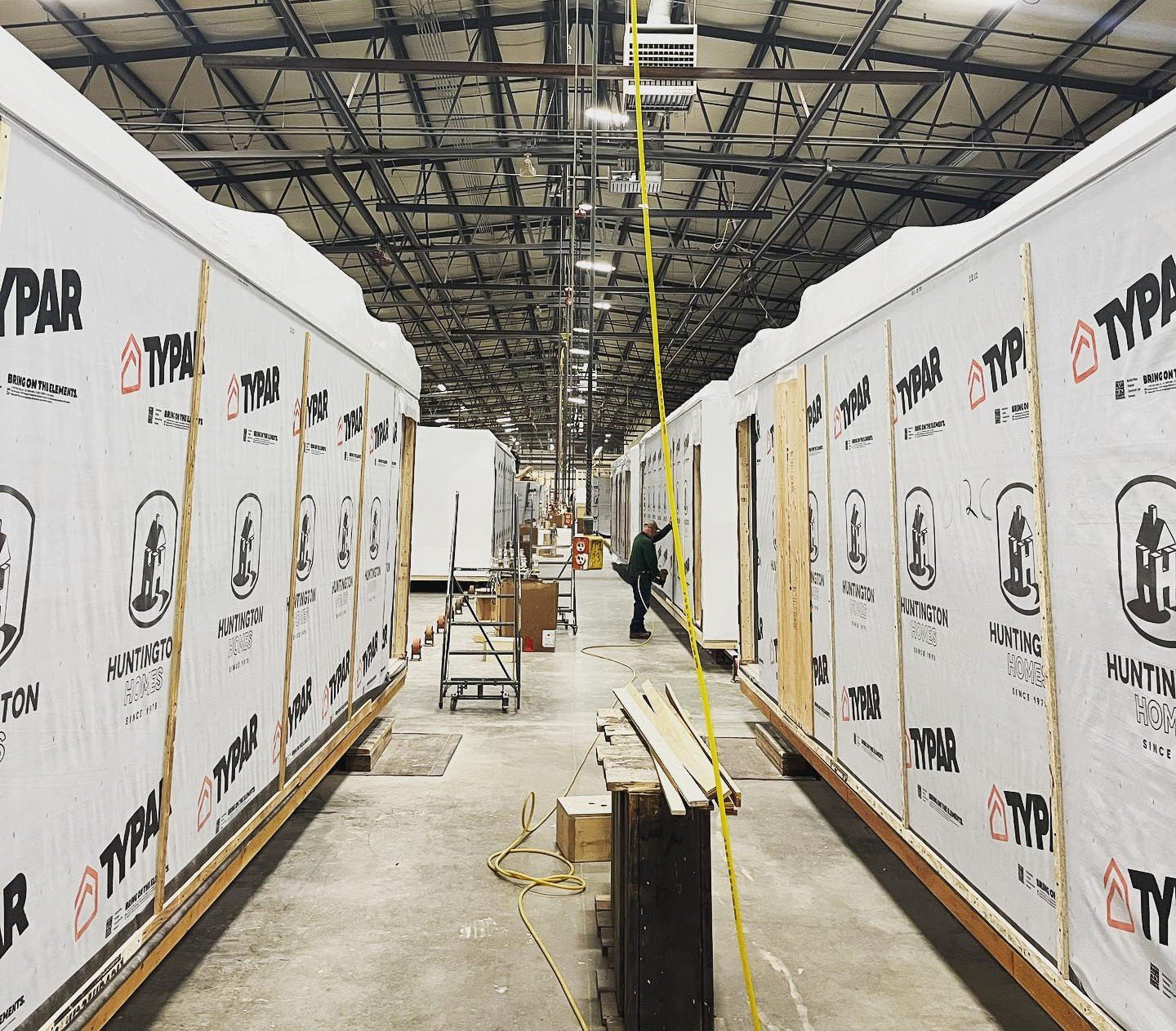
(Courtesy of huntingtonhomesvt/Instagram)
This is only about a quarter of what Vermont officials say is needed to keep prices affordable for the average resident.
One solution is off-site, mass-produced homes, which include modular, manufactured, tiny, 3D-printed, and Huntington’s Lego block units. They are cost-effective and can be built in a few days rather than months.
All indoor construction means goodbye to delays caused by weather events, as well as difficulties finding skilled on-site construction labor, of which there is a nationwide shortage.
Why aren’t there more mass-produced homes?
While factory-built homes are common in places like Quebec and Europe, buyers in the U.S. tend to want the custom-built “dream” house. Mass-produced homes have only a few floor plans to choose from and don’t have the massive amount of choices that Americans are accustomed to.
Huntington Homes offers a compromise to the customer stuck on uniqueness. While its cheaper pre-packaged TruHomes have only four floor plans to choose from, its Stock Homes have 75. It also offers Custom Homes, which cost more.

(Courtesy of huntingtonhomesvt/Instagram)
A buyer can upgrade select finishes, but everything else with a TruHome is pre-selected for maximum savings in cost and time.
The construction offers a bit of customization, however. You can choose to have the company oversee full assembly of the module on your site or have your own contractor pour the foundation and prepare the site. The company offers a set crew to assemble the modules. The second option is less expensive.
The cheapest home, the Nullhegan, is $188 per square foot, almost half of the median home price in Montpelier, where the company is based. This plan comes with two bedrooms and a bathroom in 1,288 square feet of living space.
The company says its homes are best suited for those with less of a need for space, such as buyers who are downsizing or want a starter home.
Of course, the cheap price doesn’t include the land the home needs to sit on.
But do they look cheap?
Huntington Homes houses are mass-produced, but you wouldn’t know it from looking at them. These are not your typical mobile homes.
The homes’ New England farmhouse aesthetic is right on trend. In fact, half of the homes are shipped to clients in places like Cape Cod and Nantucket, MA, upscale markets known for timeless, tasteful architectural styles.
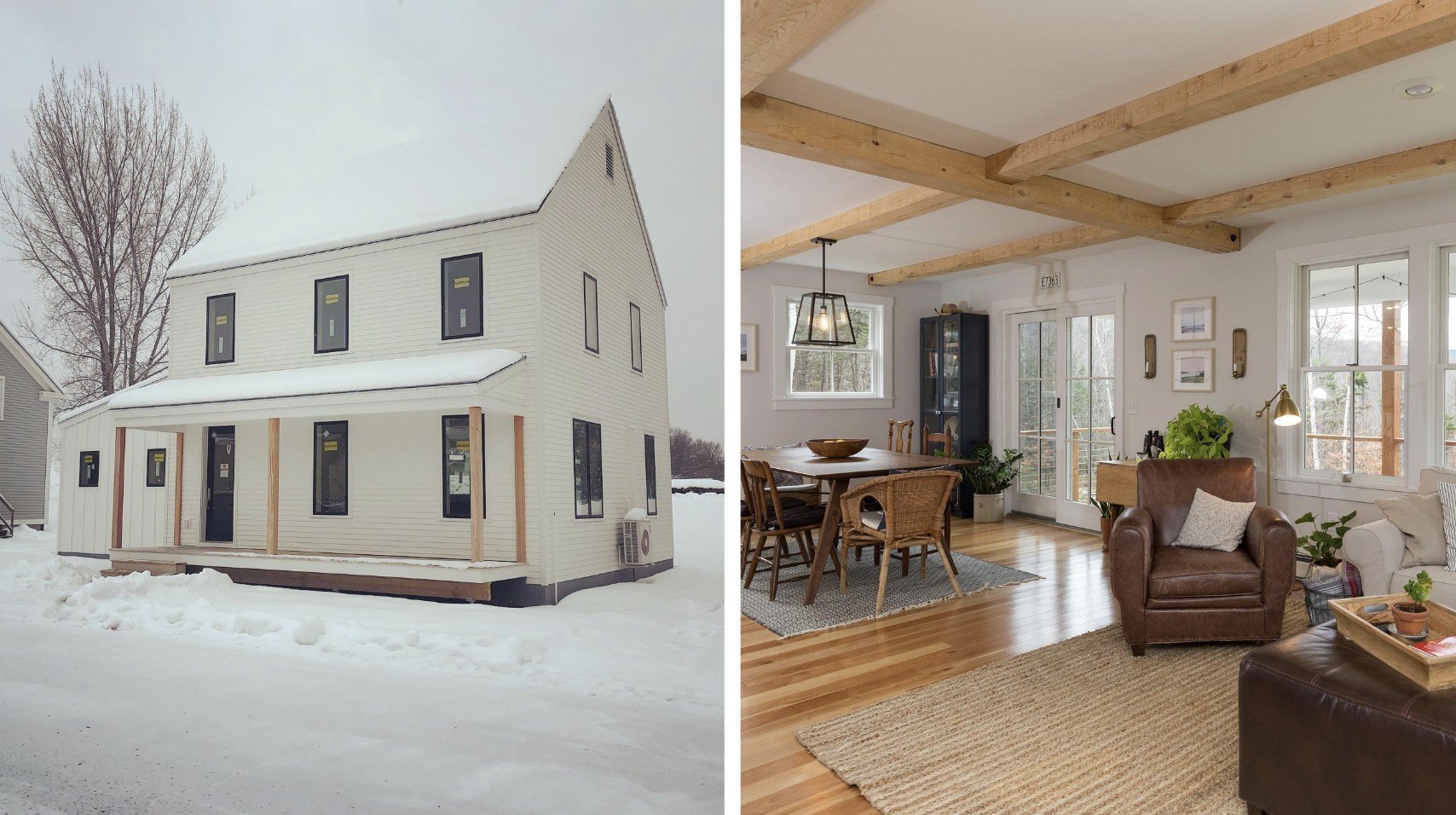
(Courtesy of huntingtonhomesvt/Instagram)
The interior is sure to please any HGTV fan, with wood floors, ceiling planks, and details such as farmhouse cabinets and subway tile backsplash.
The houses are also made to be highly energy efficient, low VOC, and completely electric with no fossil fuel mechanical equipment. They have a high amount of recycled content with little plastic or vinyl, and solar panels can be added if you want to go off-grid.
“A factory-built house looks and feels indistinguishable from stick-built homes,” says Bruce Ailion of Re/Max Town and Country to Realtor.com®. “If I were a seller, I would feel no need to disclose a home was factory-built versus stick-built. The buyer would likely not be able to tell the difference.”
How Vermont is hoping mass-produced homes can solve its housing crisis
With traditional homebuilding, “you might be able to build two units, four units, 10 units, even 20 units, right on a particular site,” Jeff Lubell, a housing researcher, told VT Digger. “But in a factory, you can build a hundred units a year. You can build 200 units a year.”
Developers are getting in on the game.
Last year, local developer Summit Properties bought 45 duplexes and townhomes from Huntington Homes, which will be sold as part of a new mixed-income housing development in Middlebury, VT.
Summit’s chief operating officer Zeke Davisson told the outlet this would save up to 10% on costs, which will be passed along to the buyer.
Co-owner Webster said he hopes to work more with Vermont developers in the future.
The downside of mass-produced homes
While the promise of a home assembly line future sounds like the solution to the lack of affordable housing, there is a downside.
This kind of factory has an extremely difficult time weathering a housing downturn, such as the one that blew apart the industry in 2008.
Even Huntington Homes is still making only half the houses it did in 2007, before the the housing bust.
This fear makes states leery about investing in more homebuilding factories.
There is also the question of resale. There is no evidence that assembly-line homes suffer a slower appreciation in value, but some buyers may prefer homes built the old-fashioned way.
“From my experiences, there is a bit of a stigma attached to a factory-built home versus something built from the ground up,” says Cara Ameer, an agent licensed in California and Florida.
But it depends on the area, she says. “If there is a lot of that type of inventory, then it may not have as negative of a perception versus if there are plenty of traditionally built single-family homes.”
However, Martin Orefice, CEO of Rent To Own Labs, has a different take: “Once manufactured homes hit the resale market, they’re usually just thought of as homes, especially if they have essential features like a proper foundation, good insulation, and standard utilities,” he says.
He adds that manufactured homes are “just the right size to fit the chronically underserved starter home segment of the market, so they tend to go fast and command good prices.”
For now, with states like Vermont desperate for more housing, the Lego block home makes perfect sense.
Categories
Recent Posts


"My job is to find and attract mastery-based agents to the office, protect the culture, and make sure everyone is happy! "