
The U.S. Government Has a Landlord, and Trump Isn’t a Fan

Maansi Srivastava for WSJ
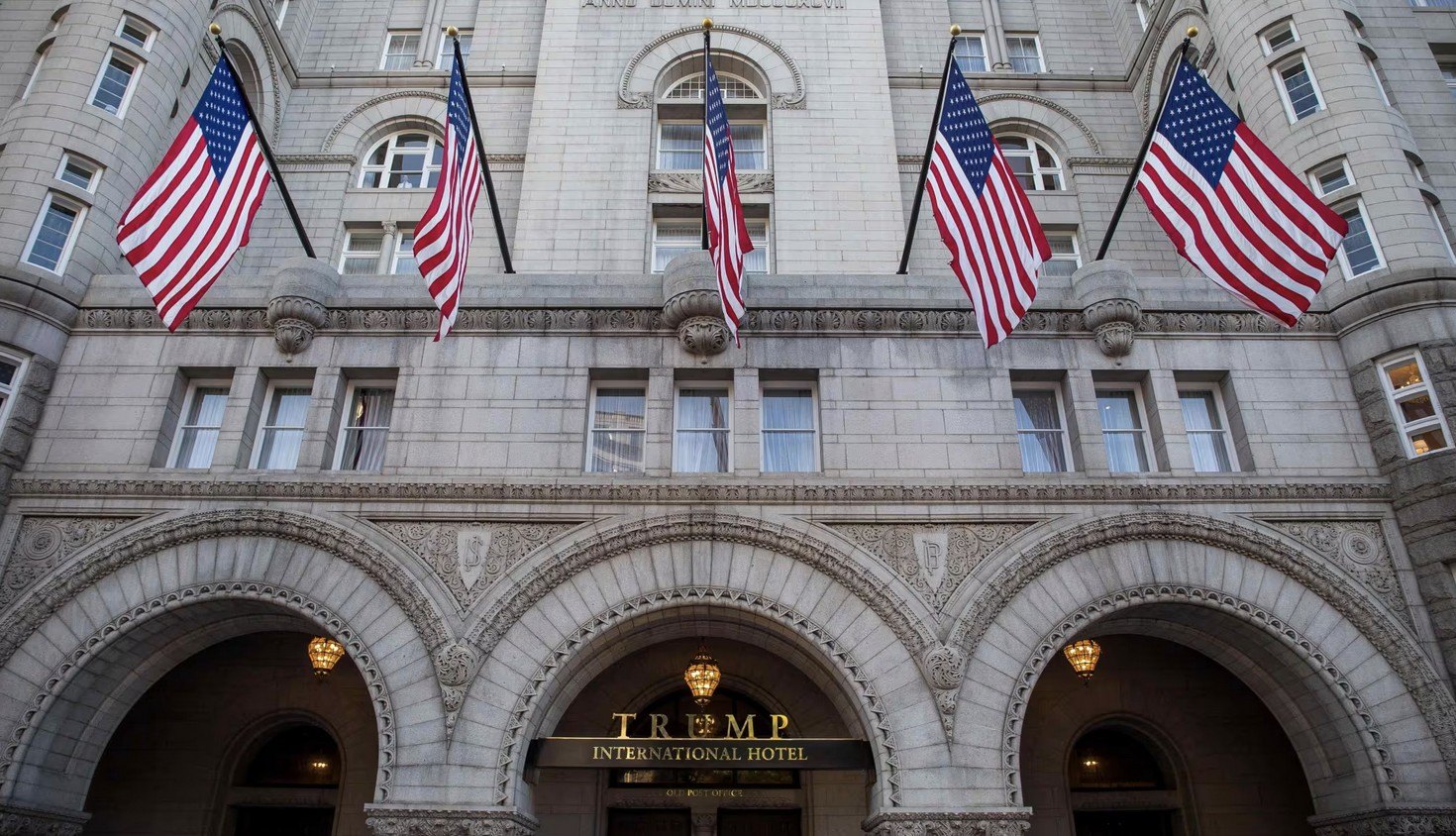
Shortly before he was elected president in 2016, Donald Trump took a break from campaigning to attend a ceremony for his new flagship hotel, the Trump International Hotel Washington, D.C.
The General Services Administration, the federal agency that owns, manages and leases much of the government’s real estate, had previously awarded Trump the rights to redevelop the government-owned Old Post Office as a luxury hotel. The GSA selected him over Hilton, Marriott International and other big-name operators.
Just before cutting the ribbon on the hotel’s opening day, Trump took a moment to praise the agency.
“The GSA people are amazing professionals,” he said.
Since then, Trump has soured on the GSA. That change of heart could soon accelerate a shake-up already under way in the federal government’s real-estate portfolio.
The GSA manages a massive portfolio of federal buildings, consisting of 370 million square feet nationwide. But many have been poorly maintained due to lack of funding, and are sitting empty or underused, the GSA testified before Congress in 2023.
( Agence France-Presse/Getty Image)
The Trump administration is considering selling two-thirds of the federal government’s office stock to the private sector, according to people familiar with the transition operations.
About three-quarters of the 70 million square feet of office space the GSA leases from private landlords in D.C. is also likely to be canceled, according to Don Peebles, a longtime Washington, D.C.-based developer. A sharp rise in GSA canceled leases would pressure D.C. landlords, many of which count on the GSA as an anchor tenant.
A GSA spokeswoman said: “GSA continues to work to right-size the federal portfolio, and is committed to optimizing space in federal buildings.” GSA could further accelerate these efforts with funding from Congress, she added.
The GSA has also been working to reduce the real estate it owns as more of its buildings deteriorate from a lack of maintenance. But it is hardly an easy task. Before auctioning off any properties, the GSA must typically make them available free or at a reduced cost to government entities. Ultimately the agency doesn’t keep the profits of the sales.
Much of what it can sell, Peebles said, will likely be at fire-sale prices. That could drag down the worth of other D.C. office buildings, which have already plunged in value in recent years.
“Buildings will sell for 30 cents on the dollar,” Peebles said. “It’s a paradigm shift. There will be a dramatic reset on property values.”
Trump and the GSA have a long, intertwined history.

(Library of Congress/Interim Archives/Getty Images)
Marjorie Merriweather Post, heiress to Post Cereals, owned the Mar-a-Lago residence in Florida. She turned over the Palm Beach property to the federal government upon her death in 1973. But the GSA found it too expensive to maintain, returning it to the Post Foundation in 1981. Trump acquired it about four years later and it has become a resort and his primary residence in recent years.
Trump crossed paths with the GSA again in 2012, after the agency picked his family company to manage the Old Post Office as a luxury hotel, the jewel in the Trumps’ lodging portfolio. And if the Trumps decide to make a play for it again after selling the lease in 2022, the GSA will have to approve that purchase.
But the relationship began to deteriorate a few years later, after Trump clashed with the GSA over emails it turned over as part of the special counsel investigation into Russian interference in the 2016 presidential election.

(Allison Robbert for WSJ)
And following his 2024 election victory, Trump has mostly kept his distance. He shunned the GSA’s offer to provide temporary office space in Washington, D.C., and other resources during the transition. That makes him the first president-elect who didn’t accept resources as part of the transition since they were offered starting in 1963.
The GSA was founded in 1949 by President Harry S. Truman. Long before Trump’s Department of Government Efficiency—where Elon Musk has vowed that DOGE will slash up to $2 trillion from federal spending—the GSA was the original vehicle for cutting government waste. It consolidated many different agencies after World War II, with a mandate to save taxpayers money.
Over the years, its role evolved into serving primarily as the government’s landlord. It also functions as federal agencies’ one-stop shop for goods and services, including computers, vehicles and catering services.
Lawmakers tried to help the GSA recently, when Congress loosened some selling restrictions for a select group of federal buildings, allowing the agency to market or auction many buildings at once.
But that still won’t make unloading many of these properties easy. Some massive government buildings are empty or uninhabitable, said one former GSA official. Many others were built in the 1970s and have lacked the proper maintenance for decades.

(Maansi Srivastava for WSJ)
Take the former GSA regional headquarters in L’Enfant Plaza. The nearly 1 million-square-foot office building is the largest property the GSA is looking to shed. It is in a prime Washington, D.C., location. But it has stood empty since 2018, due to its need for extensive renovations that would cost about $184.8 million, per a report put together by the GSA in September of 2021.
“It’s a tough time to own an aging office building,” said Darrell Crate, chief executive of Easterly Government Properties, which owns and manages real estate that it leases back to the federal government. “There is a thicket of bureaucracy that needs to be thinned.”
Many federal office buildings are run with bare-bones services and have been nearly empty since the pandemic accelerated the trend of working from home.
A recent report from Sen. Joni Ernst, a Republican from Iowa who chairs the Senate DOGE caucus, found that not one of the headquarters for any major agency or department in Washington is more than half full. GSA-owned buildings in Washington, D.C., average about a 12% occupancy rate. The government owns more than 7,500 vacant buildings across the country, and more than 2,200 that are partially empty.
“The government is not very good at managing real estate,” Crate said.
Mar-a-Lago is a prime example of a property that the government couldn’t manage well, but that Trump was able to turn around for profit as a resort and private club.
“GSA couldn’t handle it,” said Crate. “But Trump picked it up and turned it around.”
Categories
Recent Posts


"My job is to find and attract mastery-based agents to the office, protect the culture, and make sure everyone is happy! "